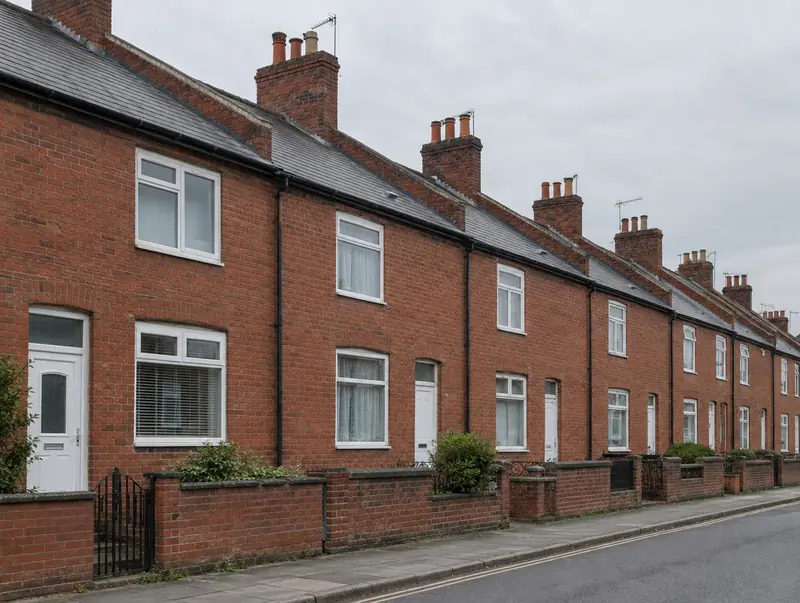
Why a party wall loses heat
Many semi-detached and terraced homes built with cavity separating walls have that cavity open to the loft. Air moves up the cavity and out at the top, a loss sometimes called the party wall bypass. Filling the cavity and sealing the top stops it.
What we need from you and your neighbour
The cavity is shared, so we talk you through notifying your neighbour before work. Filling is done from your side, usually through the loft. The survey confirms the wall is a cavity wall and not solid masonry, and checks for cables, flues and any gaps that would let fill escape.
What is included
- Loft inspection and borescope check
- Certified fill to the separating wall
- Sealing at the top of the cavity
- Neighbour notification guidance
- Written result and photos
Party wall cavity insulation prices
| Party wall cavity insulation guide prices | Guide price |
|---|---|
| Party wall, two-storey house | £595–£895 |
| Party wall, bungalow | £395–£695 |
No VAT is charged on installing insulation in homes until 31 March 2027 (then 5%). Guide ranges only: the fixed price is confirmed in writing before any work starts, and anything that could not be seen at survey is agreed with you first.
Rules and funding by nation
The building regulations route and the funding schemes differ between England, Wales, Scotland and Northern Ireland. The local pages for your area explain the rules where you are; in short:
- England: Filling a cavity is notifiable building work and needs a building notice or competent-person self-certification.
- Wales: Filling a cavity is notifiable work under the Building Regulations as they apply in Wales, usually self-certified through a competent person scheme.
- Scotland: No building warrant is needed for insulation within a wall, but the work must meet the building standards.
- Northern Ireland: Inserting cavity wall insulation needs a building control application to the council before work starts.
Sources: Energy Saving Trust: cavity wall insulation; Planning Portal: cavity wall insulation and building regulations; Welsh Government: building work competent person schemes; HMRC: VAT on energy-saving materials (Notice 708/6).