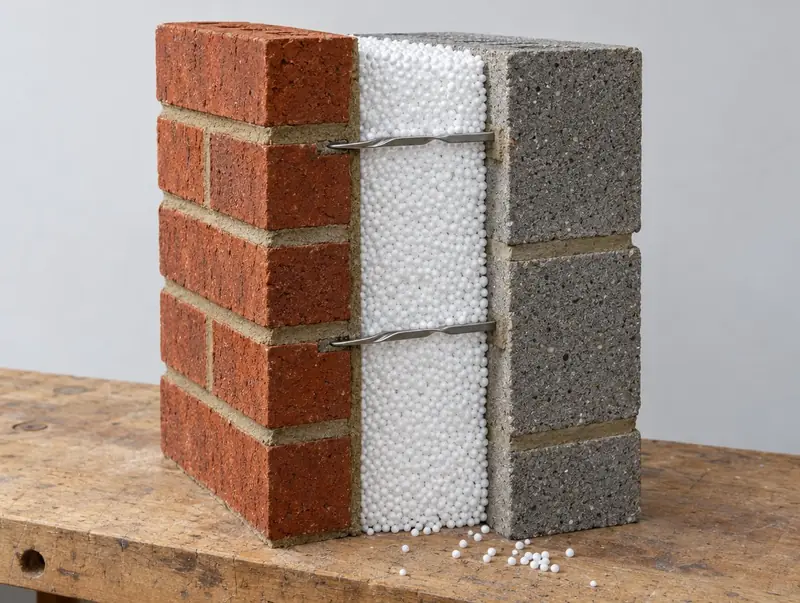
Mineral wool or polystyrene beads: which cavity fill?
Blown mineral wool is non-combustible and usually a little cheaper; bonded polystyrene bead flows into narrow and uneven cavities more evenly and some bead systems are certified for higher driving-rain exposure. Neither is best everywhere: the wall, its exposure and the building's use decide.
By the Cavity Wall Insulation UK editorial team · checked against the official sources below · last reviewed 19 October 2026
Side by side
Blown mineral wool
Bonded polystyrene bead
What it is
Water-repellent glass or stone fibre
EPS beads coated with a binder
Fire
Non-combustible
Combustible; certificate sets limits
Narrow or uneven cavities
Less forgiving
Flows around obstructions
Exposure
Common in sheltered and moderate zones
Some systems certified for higher exposure
Cables in the cavity
No special precautions
PVC cables checked and protected
Typical price
A little lower
A little higher
What about foam?
Old urea-formaldehyde foam is no longer a mainstream choice, and some foam materials need an assessment of formaldehyde emissions under the Building Regulations. Modern polyurethane foam has specialist uses, such as stabilising failing wall ties, rather than general cavity filling.