How cavity wall insulation is installed, step by step
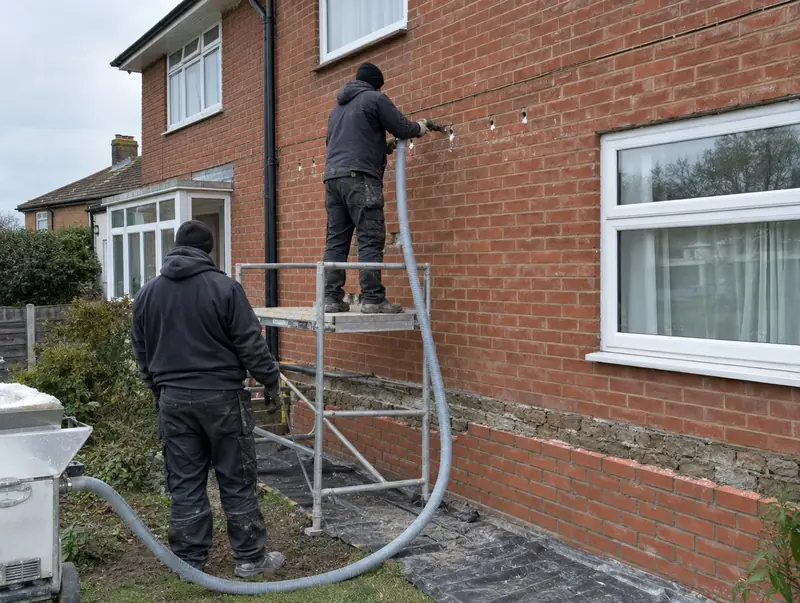
Cavity wall insulation is installed from outside: small holes are drilled in the mortar joints in a set pattern, certified insulation is blown in from the bottom up until each section is full, and the holes are filled with colour-matched mortar. A typical house takes a few hours once the survey has confirmed it is suitable.
Before the day
Survey and written result; any repairs done first; building regulations route agreed (a building notice or self-certification in England and Wales, no warrant but standards still apply in Scotland, a building control application in Northern Ireland); installer and guarantee named on your quote.
On the day
- Air bricks, flues and vents are checked and protected so ventilation is kept.
- Cavity barriers are fitted where your wall joins a neighbour's, so the fill stays on your side.
- Holes of about 22mm are drilled roughly a metre apart in the mortar joints.
- The material is blown in from the lowest holes upwards at the certified density.
- Holes are filled with mortar matched as closely as practical to your pointing.
- The installer checks inside the loft and any voids for escaped fill and tidies up.
After the day
You should receive the installer's paperwork, any building regulations certificate or confirmation, and the guarantee once registered. Keep them with your house deeds: buyers and their surveyors ask for them.
Related services
Sources: Energy Saving Trust: cavity wall insulation; Planning Portal: cavity wall insulation and building regulations; CIGA: the CIGA guarantee.