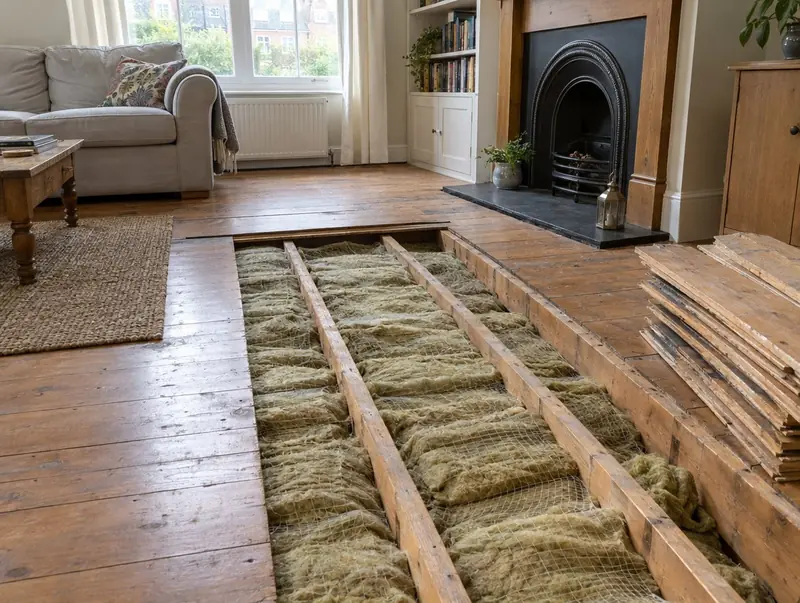
Keeping the void ventilated
Air bricks under a suspended floor must stay clear so the timbers stay dry. Insulation goes between the joists, not across the void, and gaps at skirtings are sealed to stop draughts.
What is included
- Floor void inspection
- Insulation between joists
- Draught sealing at skirtings
- Boards relaid
Underfloor insulation prices
| Underfloor insulation guide prices | Guide price |
|---|---|
| Suspended timber floor, typical room | £795–£1,495 |
| Whole ground floor | £1,995–£3,995 |
No VAT is charged on installing insulation in homes until 31 March 2027 (then 5%). Guide ranges only: the fixed price is confirmed in writing before any work starts, and anything that could not be seen at survey is agreed with you first.
Rules and funding by nation
The building regulations route and the funding schemes differ between England, Wales, Scotland and Northern Ireland. The local pages for your area explain the rules where you are; in short:
- England: Filling a cavity is notifiable building work and needs a building notice or competent-person self-certification.
- Wales: Filling a cavity is notifiable work under the Building Regulations as they apply in Wales, usually self-certified through a competent person scheme.
- Scotland: No building warrant is needed for insulation within a wall, but the work must meet the building standards.
- Northern Ireland: Inserting cavity wall insulation needs a building control application to the council before work starts.
Sources: Energy Saving Trust: cavity wall insulation; Planning Portal: cavity wall insulation and building regulations; Welsh Government: building work competent person schemes; HMRC: VAT on energy-saving materials (Notice 708/6).