Does cavity wall insulation cause damp?
Correctly specified and installed cavity wall insulation should not cause damp on a suitable wall. Damp problems arise when an unsuitable wall is filled, when the outer wall lets in too much rain, when debris bridges the cavity, or when condensation inside is mistaken for penetrating damp.
How a cavity wall keeps rain out
The outer leaf gets wet in rain; the cavity separates it from the inner leaf; water that gets through runs down the inside face of the outer leaf and out through weep holes or the base. Certified fills are designed to keep that drainage working on a suitable wall in a suitable exposure zone.
How things go wrong
- A wall in a severe exposure zone filled with a system not certified for it.
- Defects such as failed pointing or cracked render letting in more water than the wall can shed.
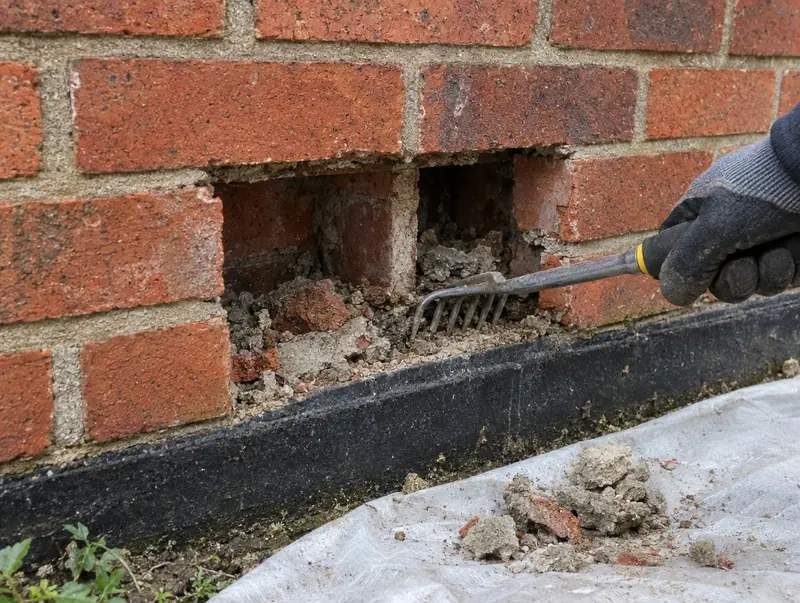
- Mortar droppings and debris in the cavity forming a bridge.
- Fill installed at the wrong density, leaving voids or compressed areas.
Condensation is common too
Mould in corners, on cold window reveals and behind wardrobes is often condensation from everyday moisture. Better ventilation and heating patterns help; a moisture survey tells the two apart.
Related services
- Damp investigation after cavity insulation
- Cavity cleaning and debris removal
- Repointing and pre-insulation repairs
Sources: Energy Saving Trust: cavity wall insulation; Welsh Government: issues arising from cavity wall insulation installations.