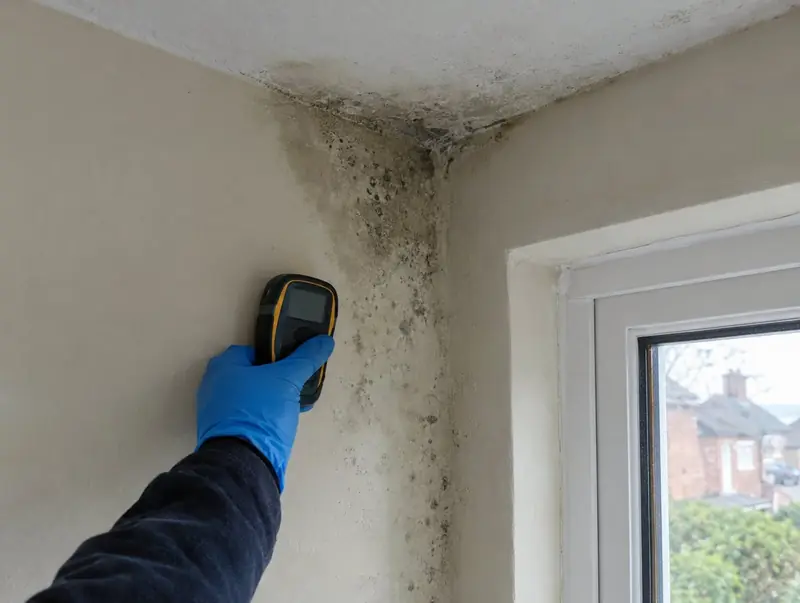
Signs of a cavity fill problem include damp patches or mould on the inside of external walls that appeared after insulation, damp low on walls or below windows, cold spots, and wet or slumped fill seen through a borescope. The same signs can also come from leaks and condensation, so diagnose before removing anything.
By the Cavity Wall Insulation UK editorial team · checked against the official sources below · last reviewed 19 October 2026
Inside clues
Damp patches or tide marks on external walls, often in patches rather than evenly spread.
Mould at the junction of walls and ceilings, behind furniture or in corners.
Damp below windows or at the base of walls.
Cold, uneven-feeling walls despite a 'filled' EPC.
Outside clues
Failed pointing, spalled bricks or cracked render on exposed walls.
Blocked or leaking gutters and downpipes splashing the wall.
Ground or paving above the damp-proof course.
Patchy drying of the brickwork after rain.
What to do next
Contact your original installer first. If there is a guarantee, follow the provider's process; for CIGA guarantees, CIGA should be told if the installer has not resolved it within two months. Get a proper damp investigation and borescope check before agreeing to extraction.